EVE-NG

EVE-NG (Emulated Virtual Environment - Next Generation) is a powerful, multi-vendor network emulator for designing, testing, and troubleshooting virtual networks. It supports Cisco, Juniper, and other devices, enabling realistic lab simulations for certifications like CCNA/CCNP. Ideal for engineers and students, it offers a web-based interface for seamless topology creation and collaboration.
Gallery
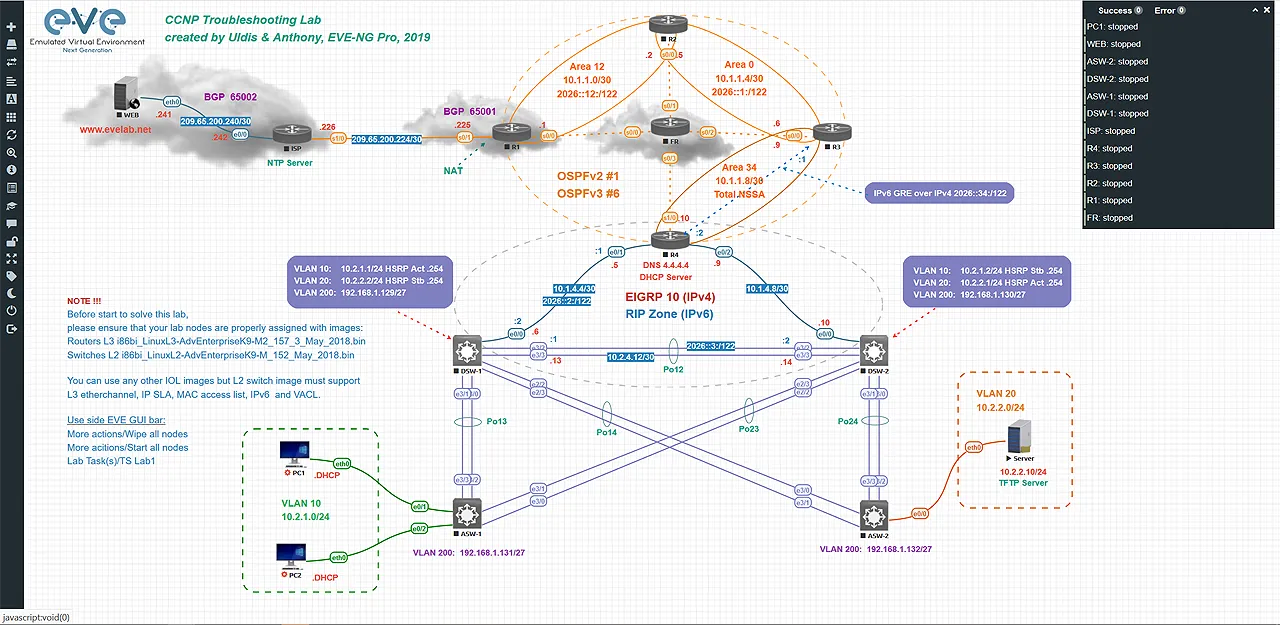
About EVE-NG
Features
System Requirements
Minimum Requirements
CPU
2-core 64-bit processor
Memory (RAM)
4 GB RAM
Storage
40 GB free space (recommended)
Write a Review
Reviews are moderated. Your review will be published after being approved by an administrator.
Have an account? Log in to post a review, or continue below with your name and email.
Ratings & Reviews
Download EVE-NG
Get the latest version of EVE-NG and start using it right away.
Related Software

Cisco Packet Tracer
Cisco Packet Tracer is a powerful network simulation tool developed by Cisco Systems, designed for learning, practicing, and visualizing computer networks, IoT, and cybersecurity concepts. It offers a virtual environment to create, configure, and troubleshoot network topologies with drag-and-drop simplicity, making it ideal for students, educators, and IT professionals. Also known as a network simulator, Packet Tracer supports multi-user collaboration and real-time protocol simulation.

eNSP
eNSP (Enterprise Network Simulation Platform) by Huawei is a powerful network simulator for training and practice with Huawei routers, switches, and security devices. It enables virtual network labs, supporting command-line configuration and certification preparation, such as HCIA and HCIE. Also referred to as a datacom device simulator, eNSP is essential for network engineers and students learning enterprise networking.

GNS3
GNS3 is a free, open-source network simulation tool that emulates complex network topologies using real Cisco, Juniper, and other vendor devices. Ideal for network certification training (e.g., CCNA/CCNP), it enables virtual labs, testing, and troubleshooting without physical hardware. Supports multi-vendor environments via integrations like QEMU and Docker.